
How many restrooms does a race in Novi need?
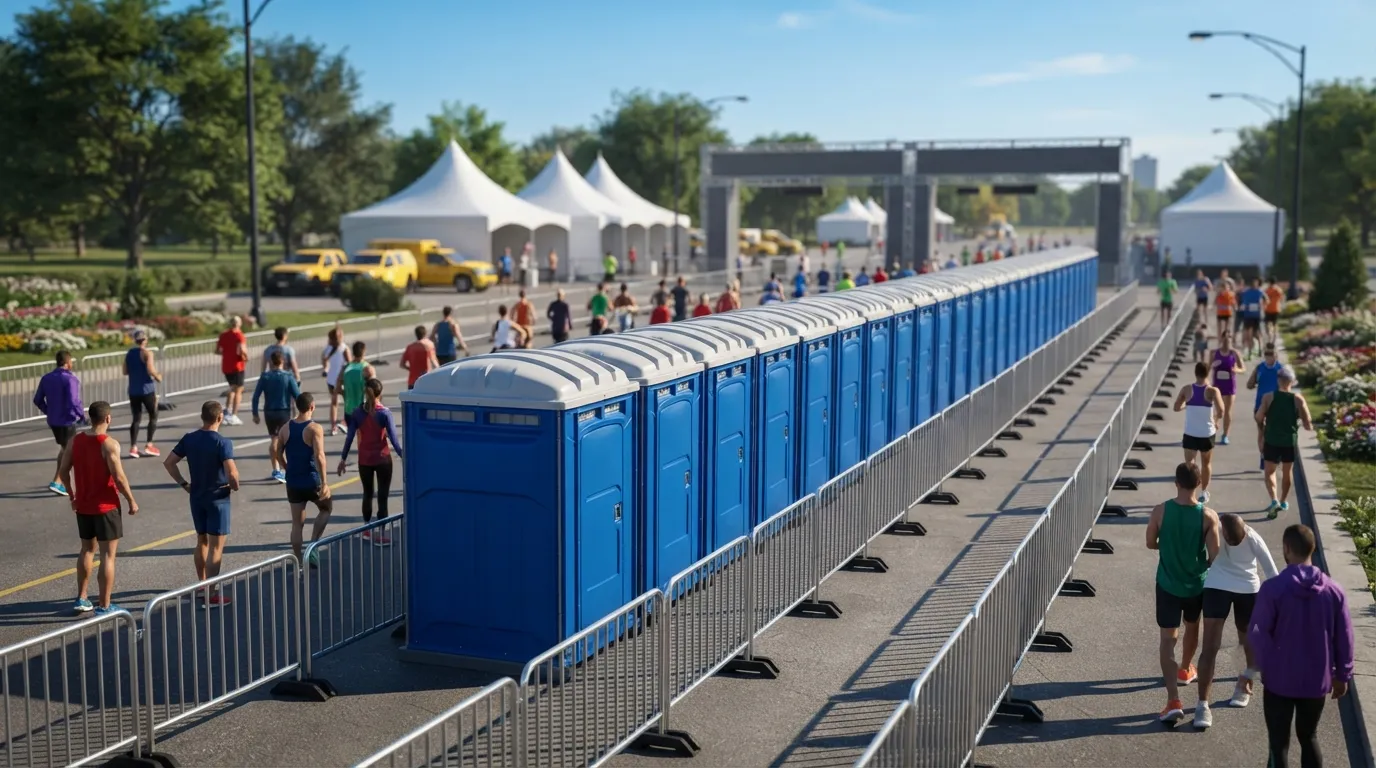
Start with the field size, then double up at chokepoints. A 5,000-runner race spread across a loop course might run fine on standard units at mile markers, but the start corral and finish chute need concentrated blocks, sometimes six or eight units side by side, because that is where hundreds of people queue in a 20-minute window before the gun. How many porta potties do I need walks through the math in more depth, but the short version: race directors in Novi usually plan tighter spacing near the start/finish and wider spacing on the back half of the course where runners are spread out. OSHA 1926.51(c) sets construction-site ratios, not race ratios, but it is still the closest published toilet-count standard most planners reference, and ANSI/PSAI Z4.3 sets the baseline service interval most portable sanitation companies build schedules around: one service visit per week for up to 10 users over a 40-hour week, which race weekends obviously exceed, so units on a race course get serviced same-day, not weekly. You will also want at least one accessible unit under ADA Standards section 213.2, which requires 5 percent of a cluster, minimum one, to be ADA-compliant, with a 60 inch turning circle inside per ADA Standards 304.3.1. See ADA accessible porta potty and ADA restroom requirements for the specifics. Pair standard units with a deluxe flushable porta potty near the finish line for volunteers and VIP timing staff who need something nicer than a mile-marker unit.
What about power, lighting and water at the start and finish?
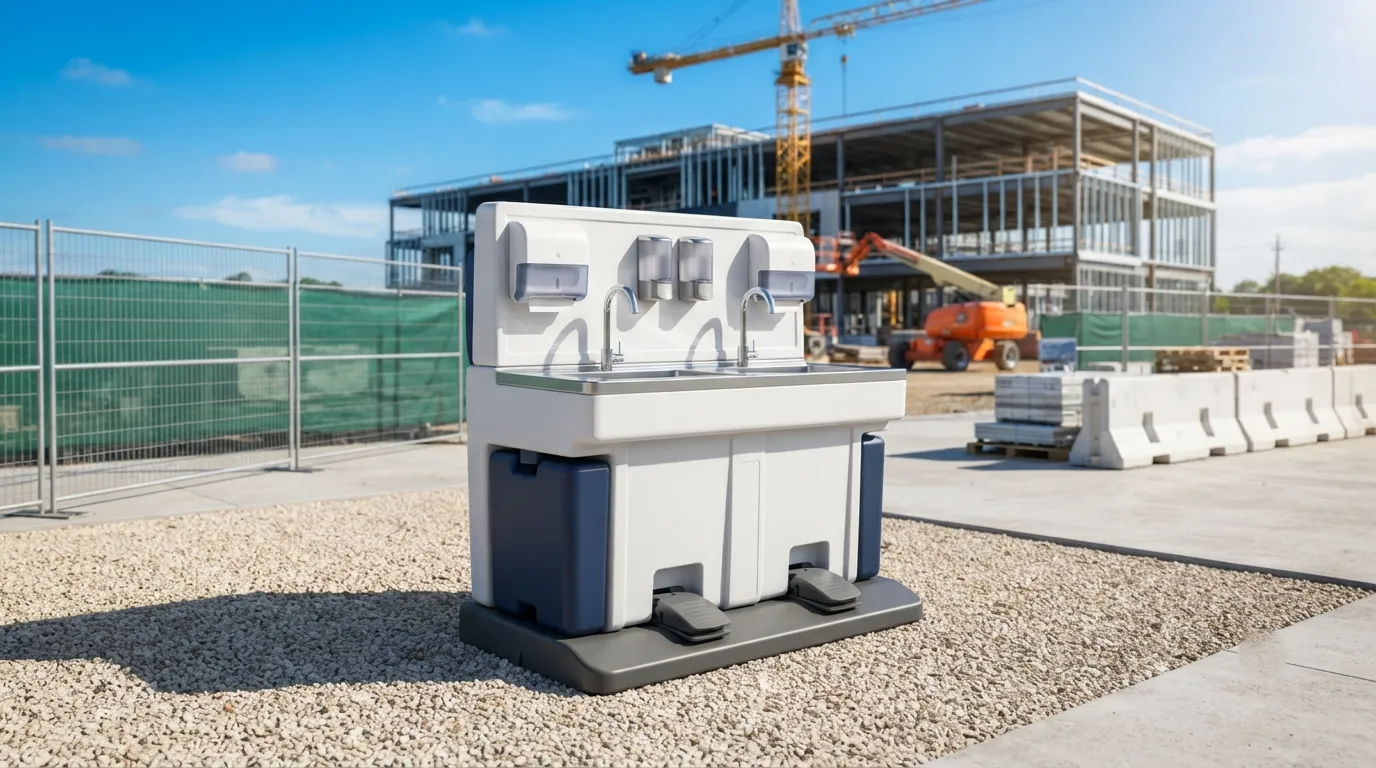
Race weekends often need more than restrooms. Timing tents run on generators or a temporary power pole, and if your event starts before sunrise or wraps after dusk, you need lighting at the staging area. Knowing how to brace a temporary power pole matters here: a pole intended for race timing equipment or a beer tent generator needs to be braced against wind load and foot traffic, not just dropped in place; crews typically guy it with at least two lines at opposing angles and stake the base plate into stable ground, checking clearance so cords don't cross a runner lane. See temporary power pole for setup details and light tower rental for pre-dawn starts or late finishes. Handwashing matters too: 29 CFR 1910.141(d)(2) requires soap and towels or a hand-drying device at washing stations, and hand sanitizer alone does not satisfy that. A handwashing station rental or portable sink rental at the finish-line food tent covers that requirement without guesswork. If your course crosses a public right of way anywhere in Novi, confirm placement with the city before delivery day; that permitting detail is not something to assume, so check porta potty permit requirements early in planning, not the week of the race.
Where should units go on race day?
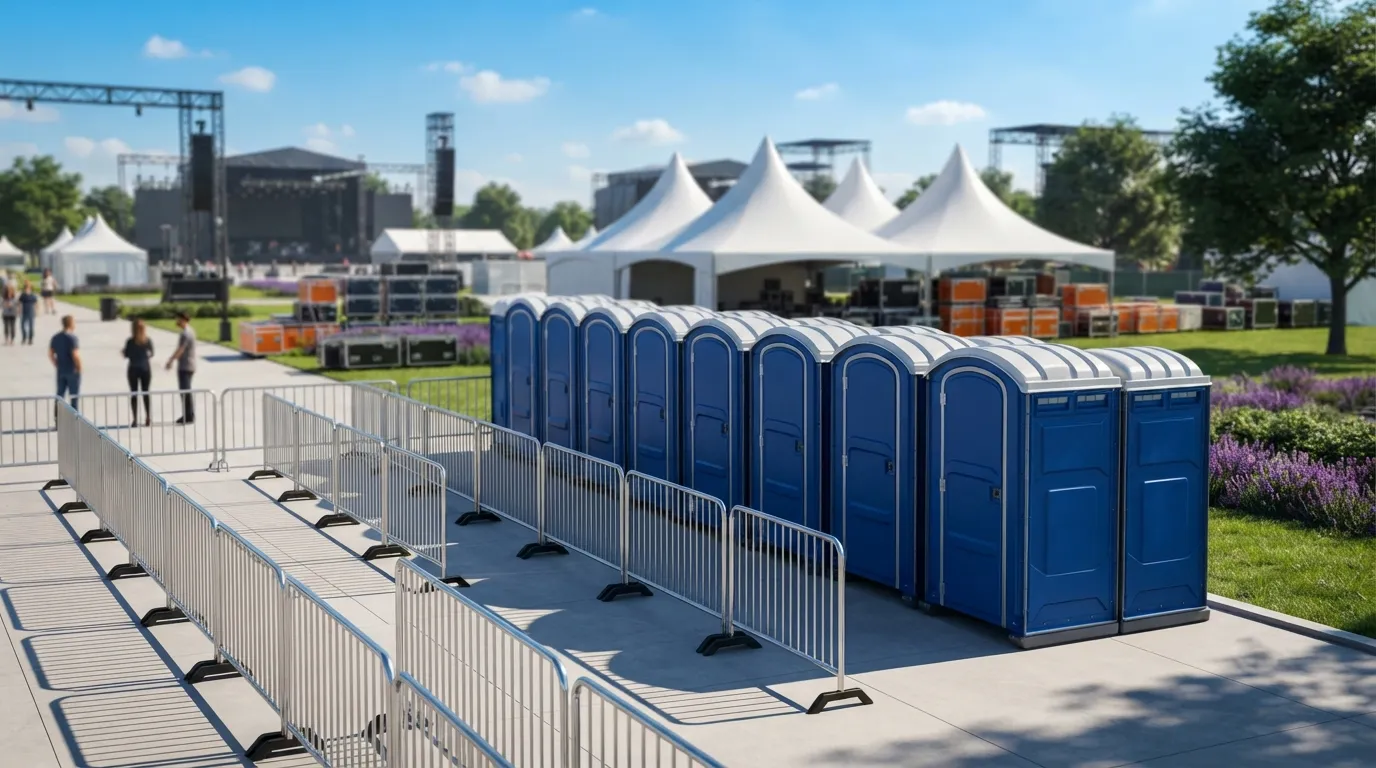
Placement drives everything else. Standard units go at mile markers and aid stations on stable, level ground per ADA Standards section 302.1, which calls for surfaces that are firm and slip-resistant, important on grass infields that get soft after a wet week in Novi. Delivery trucks need about 60 feet of straight clearance behind the drop point, so a finish line boxed in by barricades or vendor tents can complicate placement if that clearance isn't planned into the site map ahead of time. Porta potty placement guide covers ground conditions and access in more detail. For crowd control around the finish chute and expo area, temporary fence rental or crowd control barrier rental keeps spectators off the course and out of restroom lines built for runners. Larger races benefit from a restroom trailer rental, especially a 4 stall restroom trailer at the finish festival area where sponsors, medical tents and food vendors all cluster. Races staged near Wixom, 5.5 miles northwest of Novi, or Farmington, 8.1 miles east, often run point-to-point courses that need units staged at both ends and a mid-course service pass; our service areas page covers coverage across that stretch. Whatever the layout, get a firm count locked with request a quote once your course map is final, since last-minute unit additions on race morning are harder to route than units planned two weeks out.
How far in advance should we book restrooms for a race?
Two to three weeks minimum, longer for spring and fall race season when Novi calendars fill fast. Course maps, aid station counts and finish-line layouts all need to be locked before delivery trucks can plan routes, so lock your unit count early through request a quote.
Do we need ADA units on a race course?
Yes. ADA Standards section 213.2 requires at least 5 percent of any cluster of single-user units to be accessible, with a minimum of one. Place ADA units at the start, finish and at least one mid-course aid station, detailed further on ADA accessible porta potty.
Can we get restrooms serviced mid-race?
Yes, high-traffic race weekends get same-day servicing instead of the standard weekly interval. Tell your provider your runner count and start time so servicing lands between waves, not during peak flow.
What does a race-day restroom rental cost?
Standard units run in the range covered on porta potty rental cost, with event-day pricing depending on unit count, service frequency and how many ADA and deluxe units you add to the mix.
Do we need handwashing stations separate from the restrooms?
Yes, if food or drink is served. 29 CFR 1910.141(d)(2) requires soap and towels at washing stations, which hand sanitizer does not satisfy. A handwashing station rental near finish-line food tents covers that gap.
Next step
Get a delivery date
Tell us the address, the dates and the headcount. We size the order and confirm the route.