How does a portable toilet actually work?
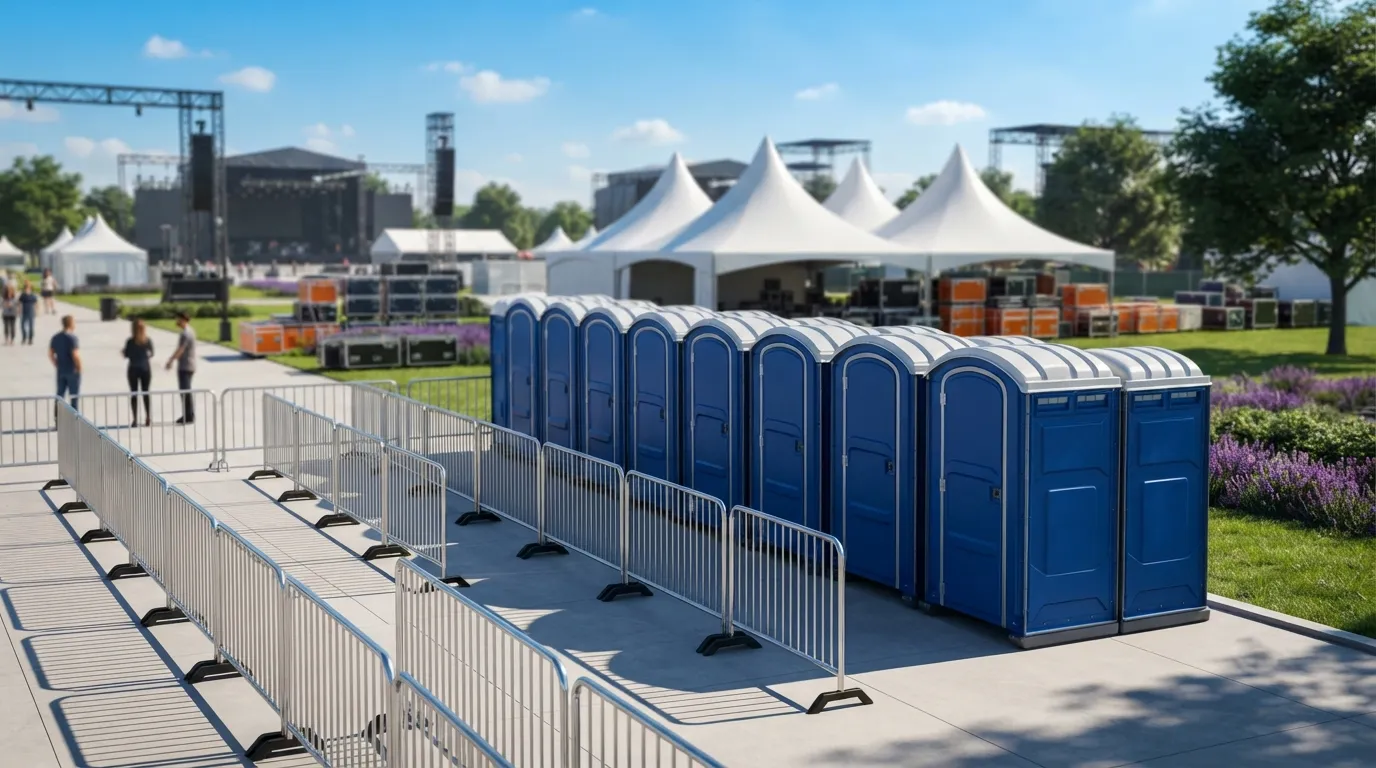
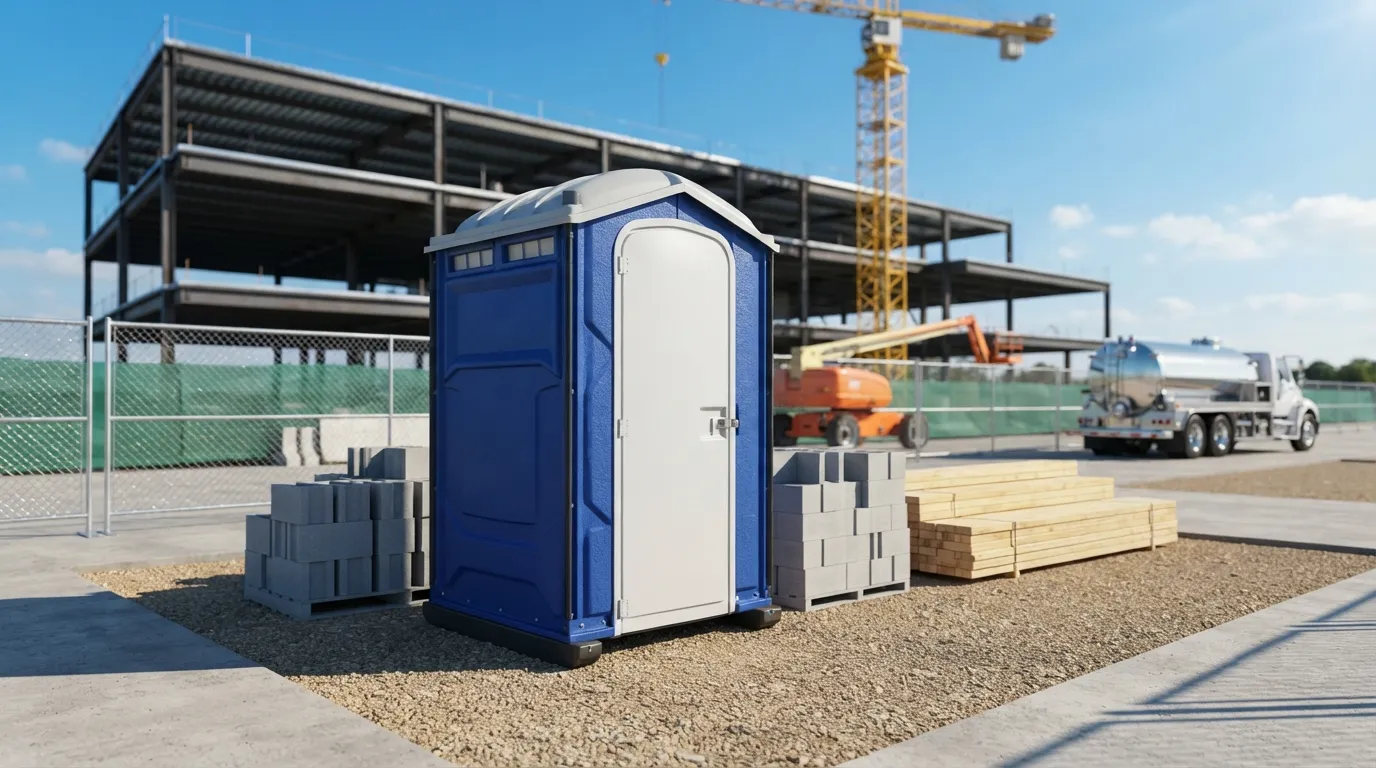
There's no water line and no sewer connection. Waste drops into the tank below the seat, where a blue deodorizing chemical breaks down solids and knocks back odor between service visits. A standard porta potty rental uses this setup, and the unit stands about 92 inches tall on a footprint near 44 by 48 inches, so it fits in a driveway, a job site corner, or a backyard without much fuss. Ventilation is passive: a roof vent stack draws air up and out instead of back into the stall. When Novi Porta Pros services a unit, the crew pumps the tank, rinses it, and drops in fresh chemical and a splash of blue water. That's the whole cycle. For sites that need something nicer, the deluxe flushable porta potty adds a foot-pump flush and a small freshwater rinse tank, which cuts odor further but still needs zero hookup. Builders comparing options for a jobsite often start with portable toilet rental or the broader portable restroom rental lineup before picking a spec. Under ANSI/PSAI Z4.3, the baseline service interval is once a week for up to 10 users across a 40 hour week, which is why a busy Novi build site with more foot traffic gets serviced more often than that baseline.
How does a portable sink work without running water?
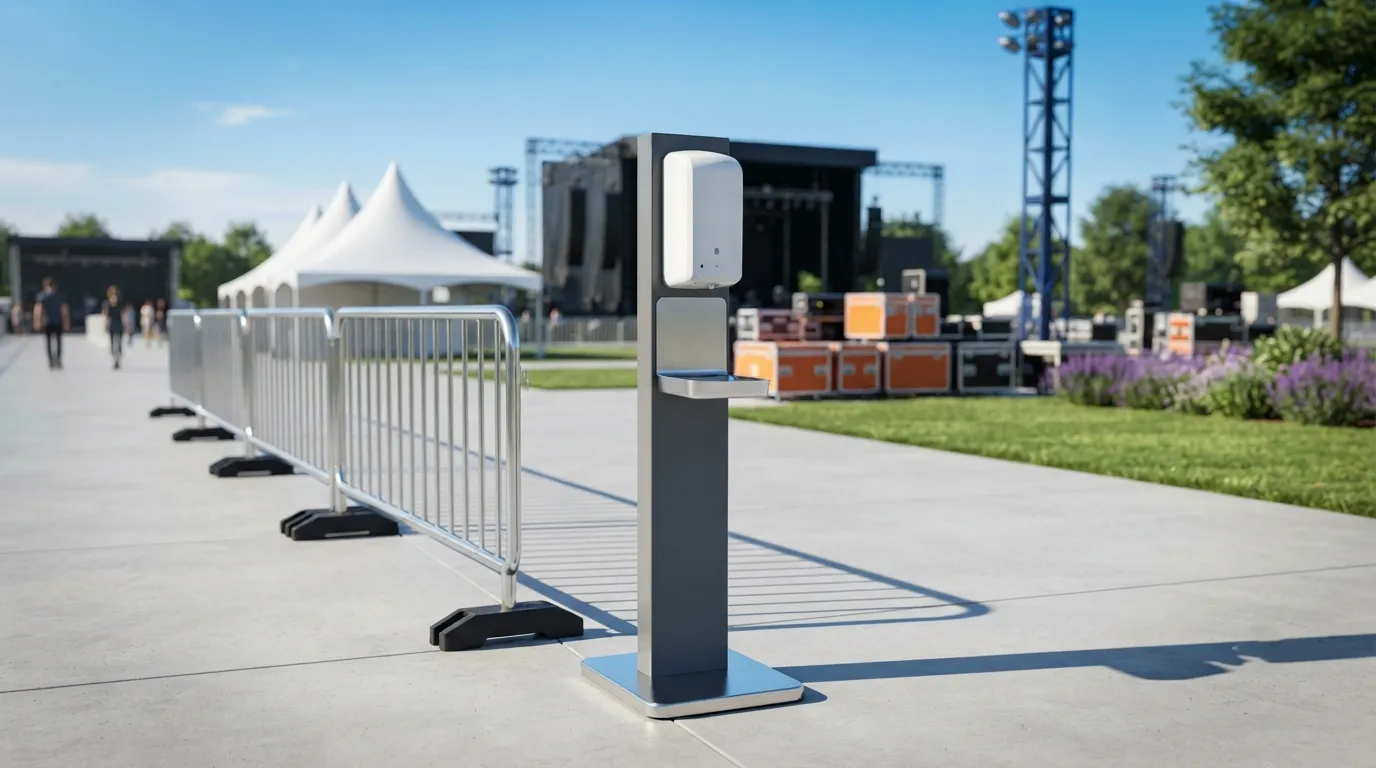
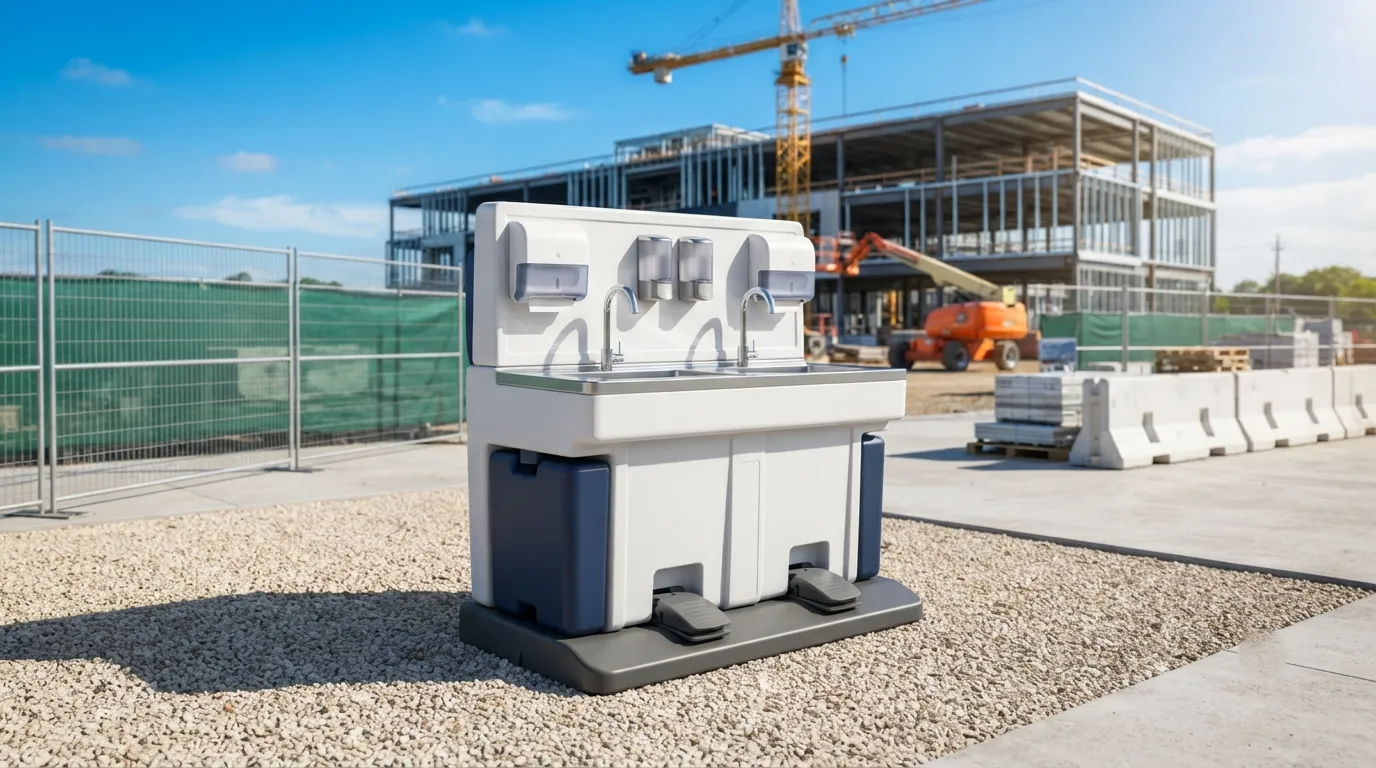
A portable sink runs off a built-in freshwater tank and a foot pump or hand crank, so water moves without a hose or a wall connection. Push the pump, water flows to the faucet, and gray water drains into a separate holding tank underneath. Soap sits in a dispenser mounted to the unit. Under 29 CFR 1910.141(d)(2), washing facilities need soap and towels or a hand-drying device, and hand sanitizer alone doesn't satisfy that. That's the gap a portable sink rental or a full handwashing station rental closes on a food vendor line or a construction crew break area. Some sites pair a sanitizer station for quick touch-ups between real handwashing, and that's a separate product covered under hand sanitizer station rental. If you're not sure which one your crew actually needs, the handwashing station requirements page breaks down the difference by job type.
Why do construction crews need a porta potty on site?
Because OSHA requires it. Under OSHA 1926.51(c), construction sites need one toilet facility for 20 workers or fewer, and the ratio steps up from there as headcount grows. A construction worker running to a porta potty on break isn't optional planning, it's the reason the unit has to be close to the active work zone and not tucked behind a fence line where nobody can reach it fast. Novi crews building near Wixom, about 5.5 miles northwest of Novi, or Farmington, 8.1 miles east, deal with the same rule; distance from downtown doesn't change the headcount math. For sites running paint, coatings, herbicides, or insecticides, OSHA 1926.51(f)(1) also requires washing facilities, since those contaminants need more than a wipe. Crews sorting out unit count for a specific headcount often check how many porta potties do I need or the full breakdown at OSHA portable toilet requirements before ordering. General contractors running multi-trade sites usually bundle toilets with dumpsters and fencing through construction site services rather than ordering each piece separately.
What about camping porta potties and chemicals?
Camping and event units work the same way as jobsite ones, just smaller and lighter for hauling. The chemical is the part people ask about most: a blue deodorizing tank treatment breaks down waste and masks odor, and it's the same category of product Novi Porta Pros uses in every standard unit, whether it's parked at a campsite or a downtown Novi event. If you're searching "portable toilet chemicals near me," that's really a service question, not a supply question, since Novi Porta Pros stocks and replaces chemical on every scheduled visit rather than selling it retail. For weekend festivals or family reunions, a camping porta potty or event restroom rental covers the same mechanics with a shorter rental window. Anyone weighing an ADA-compliant option should know that under ADA Standards section 213.2, at least 5 percent of a clustered group of units must be accessible, and never fewer than one; the ADA accessible porta potty meets that spec with a wider door and interior turning space. For a wedding or a larger gathering, a step up to a restroom trailer rental or a full luxury restroom trailer gives guests flush toilets and running sinks instead of a standalone unit.
How often does a porta potty get serviced?
Weekly is the baseline under ANSI/PSAI Z4.3 for up to 10 users across a standard 40 hour week. Busier sites, like an active Novi construction job or a weekend event, need more frequent visits. Novi Porta Pros sets the schedule based on headcount and site type, not a flat calendar.
Do porta potties smell bad?
Not when they're serviced on schedule. The vent stack and blue chemical handle odor between visits, and a pumped, rinsed tank starts each cycle fresh. Heat and low service frequency are what cause smell complaints, more than the unit design itself.
Can a porta potty be used in winter?
Yes, with some adjustments for freeze protection, like antifreeze-rated chemical instead of standard blue fluid. Placement matters more in cold months too. Details on cold-weather setup are covered at porta potty in winter.
How do flushable porta potties differ from standard units?
A flushable unit adds a foot-pump or pressurized flush and a small freshwater tank, so waste clears the bowl instead of sitting visible. It still uses a holding tank underneath, just like a standard unit, so service intervals stay similar.
Where should a unit be placed on a job site?
On stable, level ground, close enough for workers to reach quickly, and clear of the delivery truck's path. A roll-off or trailer delivery typically needs about 60 feet of straight clearance behind the truck. Full guidance is at porta potty placement guide.
Next step
Get a delivery date
Tell us the address, the dates and the headcount. We size the order and confirm the route.